
18 August 2021
Helping port city communities to fulfill their potential through education.
It is crucial to invest in the development of the local community to maintain a sustainable port-city relationship. One example of this is the...
Lire plus
Investing in human capital is one of the main objectives of the 2030 Agenda, as a port’s long-term viability and sustainability depend on its workers and their satisfaction. This broad objective encompasses the ongoing training of port personnel, raising public awareness of port-related issues, gender equality, the protection of workers’ rights and social protection, as well as sustainable innovation and industrialization. Personal development is a prerequisite for the development of human capital.
In many port cities, ports partner with universities to provide training for employees and raise awareness among residents of port cities. Reducing inequalities and diversifying the workforce require more training. A well-trained worker will have the best chance of keeping their job amid the digitization and industrialization of ports. The port authority must guarantee job security for its employees in a safe and equitable environment. With fully satisfied employees, the port can only move forward.




To invest in human capital and enable residents, young talent, professionals, and entrepreneurs to find the jobs they need to thrive through the development of port cities, the AIVP has identified five priorities for action:
In a rapidly changing sector—automation, energy transition, and the digitization of operations—lifelong learning is not a luxury but a necessity. Ports must partner with training organizations, chambers of commerce, and local governments to develop training programs tailored to the sector’s actual needs, accessible to both current workers and job seekers. These initiatives help boost the region’s appeal and reduce inequalities in port neighborhoods.
Example — Connecting to Grow (Bahía Blanca, Argentina)
As part of the Plan Blanc 2030, the port launched training programs in digital technology, environmental engineering, electrical engineering, and metal fabrication. Nearly 200 people were trained in a single phase, with direct benefits for local employability and the promotion of entrepreneurship in communities surrounding the port.
Ports have long been work environments with little diversity—in terms of gender, social background, and educational background. This lack of diversity hinders innovation and adaptability. Diversifying the profiles of port workers and managers, facilitating bridges between the port and other economic sectors, and ensuring equal treatment and the absence of any discrimination: these commitments are both ethical imperatives and drivers of performance. Skill transfers between sectors—from digital technology to logistics, from environmental science to the port, and from culture to port communications—are particularly fruitful.
Example — Green Alat (Baku, Azerbaijan)
The RoboPort STEM Lab was designed specifically to train young girls in artificial intelligence, software development, and port engineering—in a city where one-third of the population is under 18. This pioneering gender diversity initiative is preparing a new generation for careers in the maritime sector.
The transition to smart and sustainable ports requires a profound renewal of the technical expertise available in port regions. Expertise in shore-based power supply systems, renewable energy management, programming automated terminal management systems, deploying environmental sensors, and analyzing traffic data: these skills must be developed locally, in close collaboration with universities and specialized research centers. Without these qualified professionals, ports will not be able to fully benefit from the transition technologies available.
Example — Green Alat (Baku, Azerbaijan)
The project is actively preparing the Alat community for the jobs of the future at a port undergoing a transformation toward carbon neutrality by offering training in green and smart technologies as part of the Port of Baku’s overall environmental strategy.
The gap between academic research and the operational needs of the port sector often hinders innovation. Universities develop advanced knowledge in logistics, maritime trade, the green transition, and port urban planning, but do not always find concrete applications for it. Conversely, ports face complex challenges without having the resources to analyze them in depth. Structured collaboration initiatives—such as industry chairs, partnership agreements, and internship and work-study programs—serve as essential bridges between these two worlds.
Example — The PIER — Halifax Seaport (Halifax, Canada)
The PIER ecosystem brings together startups, universities, major global transportation companies, industry leaders, and government decision-makers to tackle common logistics challenges. Hackathons, “lunch and learn” sessions, student open houses, and open challenge programs enable researchers and students to work directly on real-world problems in the port sector.
Innovation cannot be mandated; it is fostered in physical spaces designed to encourage interaction, knowledge sharing, and rapid experimentation. Technology hubs, coworking spaces, learning centers, and Port Centers are key infrastructure components for the innovation ecosystem in port regions. They enable stakeholders from very different backgrounds—technicians, designers, researchers, entrepreneurs, and artists—to work side by side and create hybrid projects that would be impossible to imagine within siloed, sector-specific structures.
Example — The PIER — Halifax Seaport (Halifax, Canada)
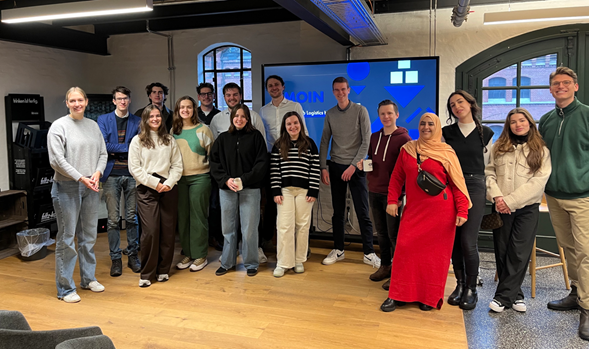
A former port warehouse transformed into an innovation space featuring a classroom, modular meeting rooms, an audiovisual presentation wall, and open collaboration areas. More than 50 members—ranging from multinational corporations to small and medium-sized enterprises—use it to develop and test innovative logistics solutions for global supply chains.

18 August 2021
28 April 2021

24 February 2021
Join AIVP and take part in a collaborative effort to promote more sustainable, responsible, and innovative urban, port, and economic development that puts citizens at the heart of its work.
Access exclusive resources, services and content reserved for AIVP members.