Innovative and sustainable solutions for energy and industry in city-port regions

Emissions from the shipping industry contribute significantly to global warming. As major players in the carbon economy, cities and ports must prioritize new technologies and proactive policies to reduce emissions.

Ports can play a central role in the global energy transition by focusing their efforts on the gradual phase-out of fossil fuels (for powering warehouses, the fleet, and terminals) and on the development of multimodal transportation to the hinterland.

They can also encourage the shipping industry to commit to the energy transition by providing shore power and rewarding the least polluting ships.

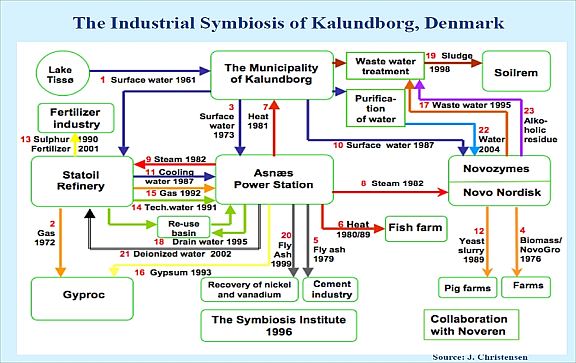
As hubs for the processing industry (steel, metallurgy, petrochemicals, chemicals, aggregates, etc.), ports also offer a robust network of complementary logistics infrastructure (rail, road, inland waterways, maritime, and pipelines). They are thus ideal locations for implementing industrial symbiosis, industrial ecology, and the circular economy.

Link to the United Nations SDGs

07 - Énergie propre et d’un coût abordable
08 - Travail décent et croissance économique
09 - Industrie, innovation et infrastructure
11 - Villes et communautés durables
12 - Consommation et production responsables
17 - Partenariats pour la réalisation des objectifs

The goals of this commitment

To place our “City-Port” regions at the heart of the energy transition and the circular economy, in true harmony with the various local stakeholders, the AIVP has identified four priorities for action:

 Collaboration and cooperation among socioeconomic stakeholders to more closely align their activities, identify potential synergies, and contribute to better management of natural resources.

Port areas are home to an exceptional diversity of economic players—manufacturers, logistics companies, energy providers, local governments, and startups—who often coexist without truly cooperating. Yet the potential synergies are considerable: waste heat from a factory reused to heat neighboring buildings, waste from one operation recycled as raw material for another, and the sharing of vehicle fleets or energy infrastructure.

AIVP encourages the creation of platforms for dialogue and cooperation among stakeholders in city-port areas, as it is through these interactions that the most effective industrial symbioses emerge.

Example — Tangier City Port – 2024 WINNER (Tangier, Morocco)
The project includes a 4,500 m² photovoltaic plant producing 1 GWh annually, a shore-to-vessel power supply system for the marina, and a waste management facility focused on recycling—a convergence of public and private stakeholders around shared energy and environmental goals.

 Prioritizing circular economy projects through new partnerships between cities, ports, businesses, and civil society, and supporting port activities aimed at optimizing the exchange and recycling of materials and energy.

The circular economy as applied to port areas goes far beyond simply recycling waste. It involves rethinking material and energy flows on a regional scale: reused construction materials, reused process water, recovered industrial heat, and shared packaging.

Partnerships between cities, ports, and businesses provide the ideal framework for identifying and implementing these synergies, as they allow for the integration of different approaches and time horizons in the public interest.

Example — Saint Louis Nautical Pole (Sète, France)
The building’s exterior cladding is made from crushed oyster shells sourced from local oyster farms—transforming a waste product from the aquaculture industry into a building material with strong cultural, environmental, and aesthetic value. A remarkable example of a circular economy rooted in the local community.

The Ville-Port region’s commitment to a low-carbon, resource-efficient path through the transformation of the industrial production system and the generation and management of carbon-free and renewable energy.

A port region’s low-carbon trajectory cannot be achieved solely by a port authority acting in isolation: it must be shared, planned, and collectively driven by all stakeholders in the region. This requires quantifiable targets, sector-specific roadmaps, and common monitoring and reporting mechanisms shared among the port, the city, and local businesses.

Local production of renewable energy—solar, offshore wind, and wave energy—offers ports an opportunity to transform their energy footprint while creating new economic sectors.

Example — HLU is HOPE (Lyon, France)
The Urban Logistics Hub incorporates zero-emission solutions—electric cargo bikes, low-carbon delivery vehicles—and will be connected to the river via a river shuttle that handles deliveries on the outbound trip and waste collection on the return trip. A prototype for carbon-free last-mile logistics.

Encouraging the port community—particularly during concession renewals—to become a partner in clean energy production.

Port concession renewals represent a strategic window of opportunity to impose new environmental requirements on operators. Including provisions related to clean energy production, shore power, emissions reduction, and responsible resource management in concession specifications is a powerful yet underutilized tool. AIVP encourages port authorities to seize these pivotal moments to accelerate the energy transition of their terminals.

Example — From the Biblical Port to a Leader in Innovation (Tel Aviv, Israel)
Solar panels on the roofs of restored warehouses, wave energy buoys along the docks, and a wind turbine: the Port of Jaffa generates its own renewable energy at a 4,000-year-old heritage site, demonstrating that the energy transition and heritage preservation are compatible.

News related to the energy transition and the circular economy

Do you share this same goal of improving the relationship between the city and the port?

Join AIVP and take part in a collaborative effort to promote more sustainable, responsible, and innovative urban, port, and economic development that puts citizens at the heart of its work.

Contact us