
24 February 2021
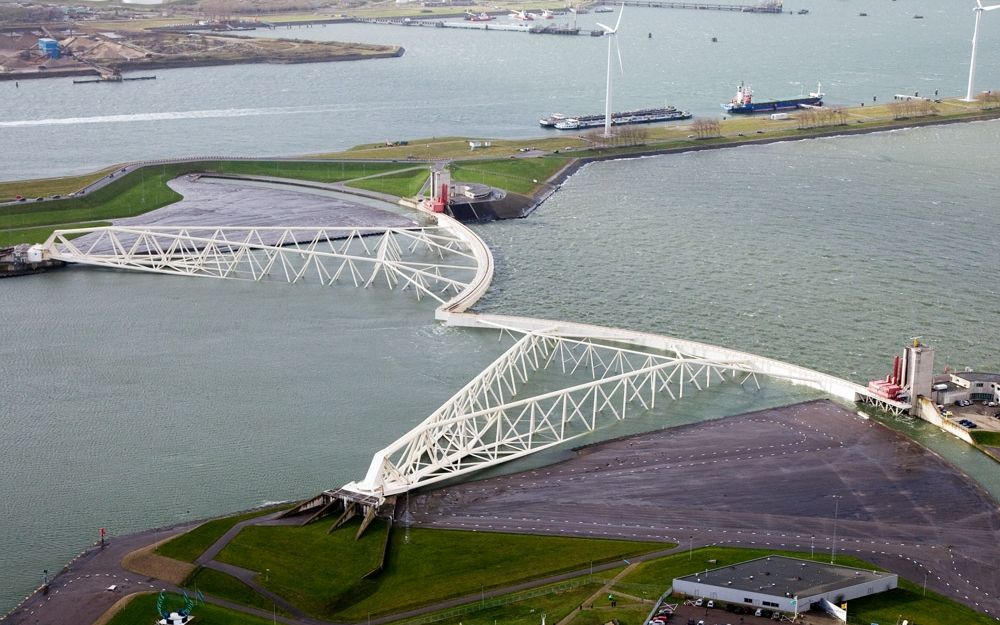
Port and city working together against the sea level rise in Rotterdam
The Netherlands is one of the countries most threatened by climate change and the sea level rise. For that reason, port and city of...
Lire plus
Climate change is undoubtedly the greatest environmental challenge of our time. People living in coastal regions around the world face a combination of threats, ranging from rising sea levels to more intense storms, as well as a host of other issues related to climate change.
Cities and ports must work together to anticipate and mitigate the impacts of climate change on maritime and river port cities.
As key players in a globalized society, ports must incorporate adaptation and mitigation measures into their policies. They must also work closely with surrounding communities and other stakeholders to propose solutions for the city-port interface and for connections with the hinterland.
The AIVP believes that the complexity of the situation calls for the involvement of the scientific community, policymakers, port authorities, and various stakeholders, and requires financially viable solutions that take environmental and social concerns into account.
To prepare for the impacts of climate change on maritime and river port cities, the AIVP has identified five priorities for action:
Joint city-port planning is an essential prerequisite for effective resilience against the risks of flooding and coastal inundation.
Strategic planning documents—territorial coherence plans, local urban development plans, and coastal risk prevention plans—must incorporate climate vulnerability data for port areas from the very outset of their development.
This requires close and ongoing dialogue between port authorities and local governments to ensure that land-use decisions do not create new risks. The creation of buffer zones, raising the protection levels of docks, and establishing appropriate building regulations are all measures that must be implemented jointly.
Example — Bekkelagsbadet (Oslo, Norway)
The site of the former container terminal was reshaped to manage stormwater runoff during extreme rainfall, with retention basins seamlessly integrated into the landscape of the public park—a design that combines climate resilience with the quality of public space.
Natural coastal ecosystems—mangroves, wetlands, seagrass beds, and riparian vegetation—serve as proven natural barriers against coastal erosion and the impact of storms. Actively restoring them is both less costly and more sustainable than most conventional engineering solutions. Ports, which have often contributed to the degradation of these environments, bear a special responsibility for their restoration. This is an approach known as “nature-based solutions,” which AIVP calls for making a standard part of city-port strategies.
Example — Duwamish River People’s Park (Seattle, United States)
Restoration of 6 hectares of estuary and planting of more than 25,000 native trees, shrubs, and wetland plants along the banks of the Duwamish River, which were previously heavily contaminated by industrial activity. The reinforcement of the riverbanks has enabled the return of the chinook salmon, an iconic and endangered species.
Extreme weather events—flash floods, coastal flooding, severe storms—can occur so suddenly that there is little time to react. The implementation of early-warning systems, incorporating meteorological data, water levels, and forecast models, is essential for triggering timely procedures for evacuation, infrastructure protection, and the safeguarding of port operations. These systems must be shared between the port and the city, with common protocols for activation and communication with residents.
Example — Baie des Rois (Libreville, Gabon)
The project incorporates stormwater treatment and retention systems to prevent coastal flooding in a city experiencing rapid urban growth, where infrastructure is struggling to cope with episodes of intense rainfall linked to climate change.
Climate change is not limited to rising sea levels. Prolonged droughts can reduce draft in inland waterways, disrupting supplies to river ports. Heat waves impose new constraints on the working conditions of dockworkers and port personnel and can affect the preservation of perishable goods. Outdoor areas in port zones must incorporate thermal comfort measures—such as greenery, shade structures, and reflective materials—to ensure these spaces remain usable even during heat waves.
Example — Redevelopment of Cartagena’s Seafront (Cartagena, Spain)
Installation of movable and fixed pergolas with Mediterranean vegetation to provide natural shade and mitigate the effects of high temperatures on users of the port’s public spaces—a direct response to the increasing frequency of heat waves in the Mediterranean.
Climate resilience and carbon neutrality are not two separate goals: they are two sides of the same need for transformation. A port that reduces its emissions helps slow down climate change, which threatens its own infrastructure. The bioclimatic design of port buildings, the integration of renewable energy sources, the replacement of thermal equipment with electric solutions, and the deployment of CO₂ capture technologies are all measures that must be incorporated from the project design phase onward, rather than added as afterthoughts.
Example — Green Alat (Baku, Azerbaijan)
The project is part of the Port of Baku’s 2035 carbon neutrality strategy—the first port in Central Asia to have obtained Eco-Port certification. It combines EcoParc, sustainable construction practices, and an emissions reduction program to make this port a model of low-carbon development.
24 February 2021
8 September 2020

31 August 2020
Join AIVP and take part in a collaborative effort to promote more sustainable, responsible, and innovative urban, port, and economic development that puts citizens at the heart of its work.
Access exclusive resources, services and content reserved for AIVP members.