A New Transportation System to Connect the City and the Port

The transportation sector currently accounts for more than 20% of global emissions. It is the leading source of emissions in many developed countries. Freight transport to and from ports is still primarily carried out by trucks, which are highly polluting vehicles. This leads to tensions with other road users and significant traffic congestion. Ports are also generally difficult for workers to reach by means other than private cars. In response, ideas for sustainable mobility and multimodal transportation have proliferated in recent years. The development of multimodal transportation can significantly reduce emissions and congestion in ports and urban areas.

Multimodal solutions are now widely deployed in urban areas—shared mobility services, improvements to public transit, electric cars, electric bicycles and scooters, and bike lanes—and could also be used for port operations, as well as the development of rail and waterway routes for freight transport. These are significant steps toward greener mobility. Cities and ports have new technological tools at their disposal: real-time data transmission can support more effective traffic coordination and planning, thereby reducing congestion and emissions.

Alignment with the United Nations Sustainable Development Goals

09 - Industrie, innovation et infrastructure
11 - Villes et communautés durables

The goals of this commitment

To improve mobility in the port city and combat urban congestion, the AIVP has identified four priorities for action:

The development of sustainable, multimodal, and collaborative transportation, particularly for commutes.

Port workers account for significant travel flows, concentrated during specific time slots tied to shift rotations. Encouraging carpooling, developing safe bike paths between residential neighborhoods and port areas, and establishing shared shuttle services or shared mobility options are all solutions that reduce dependence on private cars and improve air quality in neighborhoods adjacent to the port. This sustainable mobility benefits both port workers and residents of the neighborhoods through which routes pass, thereby strengthening the bond between the city and its port.

Example — Port of Los Angeles — Window to the Wilmington Waterfront (Los Angeles, United States)
Multipurpose paths for pedestrians and cyclists with infrastructure that fully complies with ADA (Americans with Disabilities Act) standards to ensure universal accessibility—in a community where 44% of the population lives below the poverty line and which previously had no access to its waterfront.


The development of low-carbon solutions for urban logistics, with an emphasis on the use of waterways.

The shift toward bulk freight transport via collective, low-carbon modes—rail, river, and short-sea shipping—is one of the keys to decarbonizing port logistics. This requires investments in intermodal infrastructure (rail yards, river docks, transshipment hubs) as well as economic and regulatory incentives that make these modes competitive with trucking over short and medium distances. City-port regions have a crucial role to play in creating conditions conducive to this modal shift.

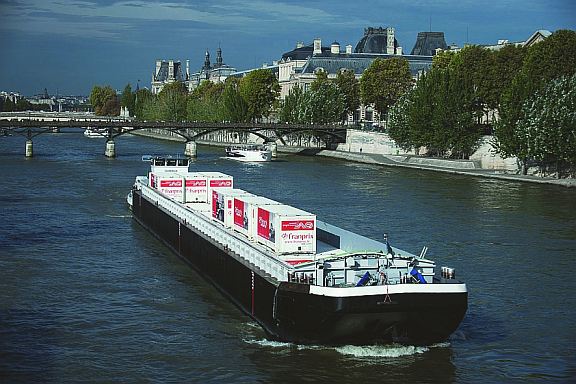
Example — Redevelopment of Javel Bas Port 🏅 Special Mention (Paris, France)
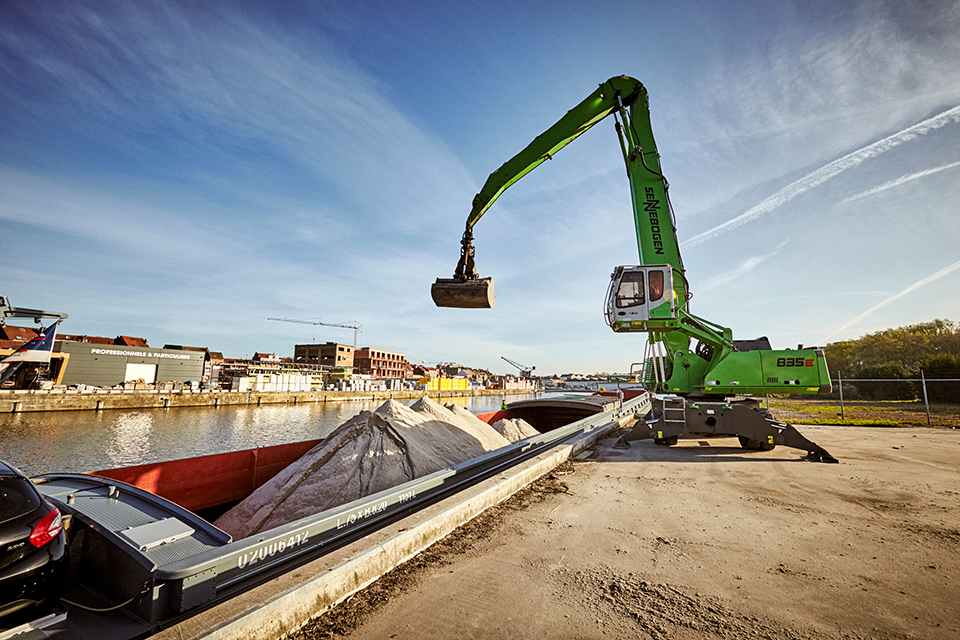
Supplies to the building materials warehouses and the concrete plant are delivered exclusively by river. The result: dozens fewer trucks each day on the streets of the 15th arrondissement, a significant reduction in CO₂ emissions, and proof that an urban industrial port can coexist with a dense residential neighborhood.


The use of waterway, rail, or any other non-fossil fuel-based mode of transportation for freight within the City-Port area.

The shift toward bulk freight transport via collective, low-carbon modes—rail, river, and short-sea shipping—is one of the keys to decarbonizing port logistics. This requires investments in intermodal infrastructure (rail yards, river docks, transshipment hubs) as well as economic and regulatory incentives that make these modes competitive with trucking over short and medium distances. City-port regions have a crucial role to play in creating conditions conducive to this modal shift.

Example — HLU is HOPE (Lyon, France)
The Urban Logistics Hub will eventually be served by road, rail, and waterways, with a river shuttle to downtown Lyon handling deliveries on the outbound leg and waste collection on the return leg—an integrated model of carbon-free multimodal logistics at the heart of a metropolitan area.

 

Reducing, by all available means, the negative impacts of peak port activity on the City-Port area.

Ports experience intense spikes in activity when multiple ships arrive simultaneously, during peak commercial periods, or when ferries operate on fixed schedules. These spikes create waves of heavy traffic that can overwhelm adjacent urban roads and significantly impair the quality of life for local residents. Solutions exist: staggering delivery schedules, smart real-time port traffic management, coordination with road authorities, and the establishment of logistics buffer zones. Digital technology now offers particularly effective planning and coordination tools to smooth out these peaks.

Example — Paseo del Bajo (Buenos Aires, Argentina)
The conversion of a highway into an underground tunnel separated port traffic from urban traffic, freeing up 20 hectares of new public space at ground level and significantly reducing congestion and pollution in the historic center of Buenos Aires, while improving the port’s north-south logistics performance.

News Related to Sustainable Mobility

Do you share this same goal of improving the relationship between the city and the port?

Join AIVP and take part in a collaborative effort to promote more sustainable, responsible, and innovative urban, port, and economic development that puts citizens at the heart of its work.

Contact us